




Domain Rating. It’s the metric everyone quotes, many clients demand, and most agencies use to demonstrate link quality. Get a link from a DR70 site — great. DR85 — even better. DR90+ — trophy link, excellent work.
The problem with this framework isn’t that domain rating doesn’t matter. It does, as a rough proxy for domain authority. The problem is that it’s a proxy — a number that approximates something more fundamental — and a significant amount of link building activity is optimizing for the proxy rather than the thing it’s trying to measure. The result is links that look impressive in a report and do relatively little for rankings.
Understanding what the DR metric is actually capturing, where it breaks down as a quality signal, and what genuinely high-authority links look like is worth the time if you’re paying for link building or evaluating an agency’s work.
What Domain Rating Measures (and What It Doesn’t)
Domain Rating (Ahrefs) and Domain Authority (Moz) are third-party metrics that estimate a domain’s link authority based on the quantity and quality of inbound links pointing to it. They’re calculated from data those tools have indexed — which is comprehensive but not complete — and using algorithms that approximate Google’s authority evaluation but don’t replicate it.
A high DR means a domain has accumulated significant inbound link equity. It does not mean:
- That the domain has editorial relevance to your niche
- That a link from the domain appears in a context relevant to your content
- That the link will pass meaningful link equity (no-follow, sponsored, or PBN-pattern links from high DR domains often don’t)
- That Google trusts the domain for the topics you’re trying to rank for
- That the site has real organic traffic and a real audience
A link from a DR80 site that’s a general-interest web directory, has no traffic, and is known to sell links is worth less than a link from a DR45 site that’s a respected industry trade publication with genuine editorial standards, a real readership, and a history of producing authoritative content in your category.
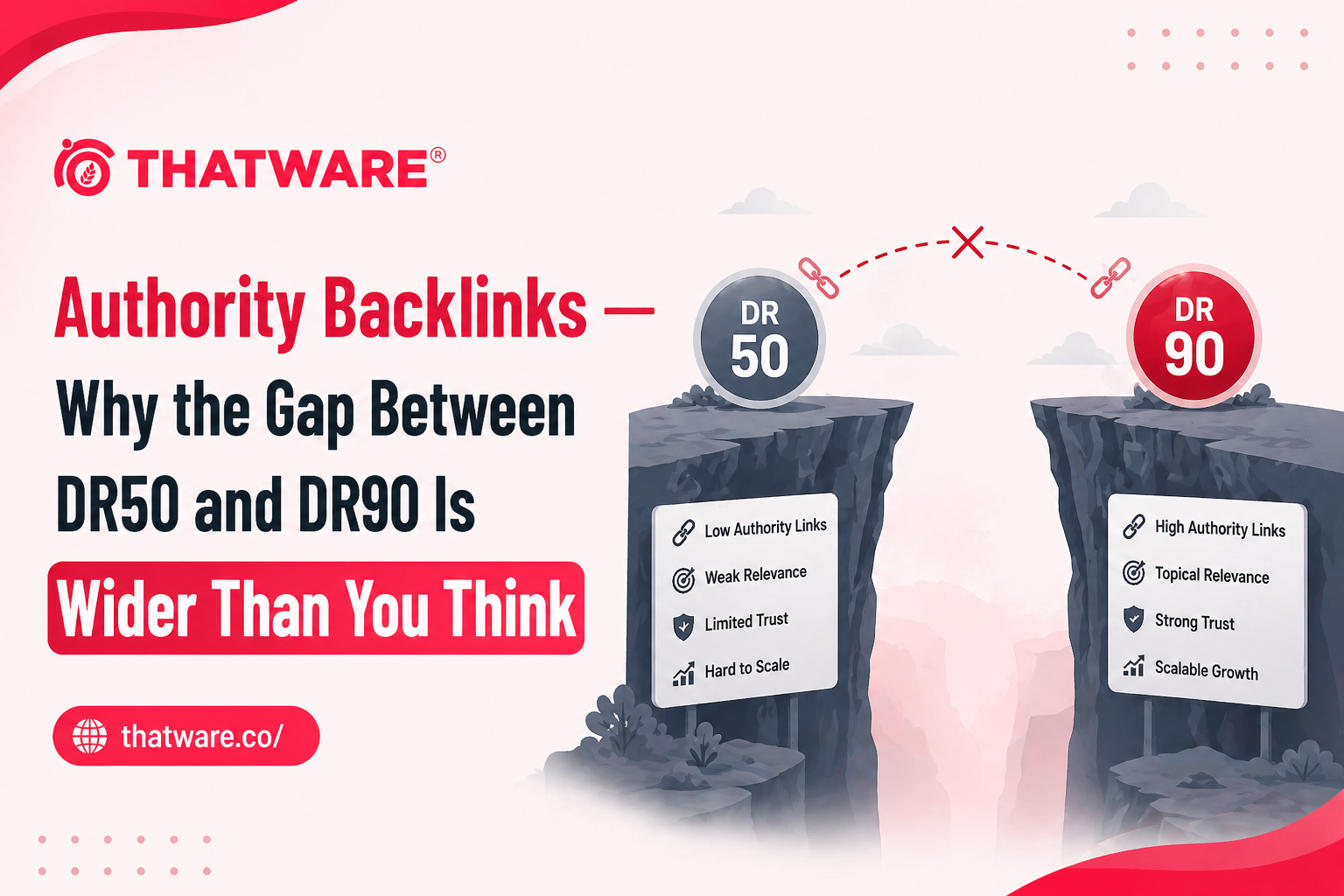
The DR gap between 50 and 90 is numerically large — about 78% of the scale. The actual authority gap, controlling for relevance and editorial quality, is often much smaller, and in some cases is reversed.
Why High-DR Links Are Often Manufactured
Here’s an uncomfortable reality about the DR70-90 link market: a significant portion of links from high-DR domains are manufactured, either through direct paid placement, PBN networks, or editorial relationships that are essentially commercial despite the appearance of organic editorial placement.
The reason is economics. High-DR domains are valuable because they’re rare — they’ve accumulated link equity over time and can’t be easily replicated. That rarity creates a market. Website owners who hold high-DR assets have a monetizable property. Link buyers will pay a premium for the metric. The result is a market where DR correlates more strongly with link price than with the actual editorial integrity of the placement.
Authority backlinks service providers that are being honest will acknowledge this dynamic and explain how their acquisition process specifically targets genuine editorial placements rather than paid placements dressed up as organic.
What a Genuinely High-Authority Link Looks Like
Genuine link authority — the kind that meaningfully improves rankings over time — has a set of characteristics that DR captures imperfectly at best.
Editorial context: the link appears within content that’s genuinely relevant to the linked topic, placed where a reader interested in that topic would find value in following it. Not in a sidebar, footer, or author bio stuffed with unrelated links — in the actual content, in a context that makes sense.
Source relevance: the linking domain has genuine authority specifically in your topic area. A link from a respected technology trade publication is more valuable for a tech brand than a numerically higher DR link from a general lifestyle site, because Google evaluates authority within topical contexts.
Traffic evidence: the linking domain has real organic traffic — verifiable in tools like Ahrefs or Semrush — indicating it’s a real website with a real audience, not a high-DR shell that exists primarily as a link-selling property.
Placement integrity: the link was placed because the content editor decided it added value for their readers, not because a fee changed hands. This is the hardest characteristic to verify externally, but it’s the most fundamental to whether the link will produce durable authority benefit.
The Practical Implications for Link Building Strategy
Backlink building agency work built around genuine authority rather than DR targets looks different from DR-chasing approaches.
Target selection involves deeper qualification than DR alone. Organic traffic, topical relevance, editorial standards, link placement patterns (how are outbound links typically used — in genuine editorial content or in obvious link placement patterns), and direct assessment of whether the publication covers topics relevant to your brand.
Acquisition methods favor those that produce genuinely editorial placements. Digital PR that earns links through genuinely newsworthy content. Expert positioning that places team members as authoritative sources for journalists. Content partnerships with specific publications that result in organic citations. These methods are slower and more resource-intensive than outreach to link sellers. They produce links that compound in value over time rather than risking devaluation as Google’s spam detection improves.
Reporting should reflect actual link quality, not just DR. An agency that reports link acquisition by average DR without discussing organic traffic, topical relevance, and placement quality is not giving you the information you need to evaluate what you’re paying for.
The DR90 That’s Worth Having vs. The One That Isn’t
To bring this back to the specific comparison: a DR90 link from a topically relevant, high-traffic publication with genuine editorial standards, in a contextually appropriate placement, is genuinely valuable and worth the significant investment required to earn it. These links exist, they’re impactful, and pursuing them as part of a thoughtful link acquisition strategy makes sense.
A DR90 link from a high-domain-rating web property that monetizes its authority through paid placements, has limited topical relevance to your brand, and is known to search quality teams as a link-selling property is providing declining value — and represents an increasing penalty risk as Google’s link spam detection continues to improve.
The gap between these two DR90 links is enormous. It can’t be seen in the metric. It can only be seen in the actual characteristics of the linking property, the editorial context of the placement, and the track record of the link acquisition method that produced it. That’s the due diligence worth doing before celebrating the link count in the monthly report.