You probably don’t give much thought to the water coming from your tap until it starts leaving its mark. Maybe the kettle develops a chalky layer, the shower glass never looks completely clean, or a glass of water has a taste you can’t quite explain. These little annoyances can become part of everyday life, but they often point to something worth investigating.
The tricky part is that water problems don’t always have an obvious cause. Two homes can experience similar stains or odors for completely different reasons. Before buying a filter or replacing plumbing equipment, it’s worth understanding what the signs might mean and which steps can help identify the actual issue.
When Minerals Make Everyday Cleaning Harder
One of the most common household water concerns is hard water, which contains elevated levels of dissolved calcium and magnesium. These minerals are naturally present in many water sources, and their concentration varies with local geology and supply conditions.
You might notice white deposits around faucets, spots on glasses, or a film on shower doors that seems to return shortly after cleaning. Soap may not lather as easily, either, leaving you using more detergent than expected. Over time, mineral scale can accumulate inside water heaters, pipes, and certain appliances, potentially affecting their efficiency.
Hard water isn’t generally considered a health concern at the levels commonly found in household supplies, but it can be frustrating to live with. Cleaning takes longer, fixtures lose their shine, and scale can become difficult to remove once it has built up.
A water-hardness test can help determine whether minerals are responsible. If the results confirm a hardness problem, a conventional ion-exchange softener may help by reducing calcium and magnesium. The right system depends on the hardness level, household water use, and maintenance preferences. A softener isn’t a universal purifier, though, so other concerns may need separate treatment.
Strange Tastes and Odors: What Could Be Behind Them?
Water doesn’t need to look cloudy to taste unpleasant. Some people notice a swimming-pool-like flavor, while others describe a medicinal or chemical smell. These characteristics can have several causes, including disinfectants used in municipal treatment, substances entering the supply, or conditions within household plumbing.
Chlorine / chemical taste & odor is one concern homeowners commonly mention. Chlorine is used to disinfect many public water supplies, helping control harmful microorganisms as water travels through the distribution system. The residual disinfectant can sometimes be noticeable at the tap, even when it is present at levels used for routine water treatment.
A properly selected activated carbon filter may reduce chlorine taste and odor. However, the effectiveness depends on the filter design, its certification, the water flow rate, and how regularly the cartridge is replaced. A standard carbon filter should not be assumed to remove every chemical or make contaminated water safe.
If a taste or smell appears suddenly, becomes unusually strong, or affects water throughout the property, investigate before installing equipment. Contact your water supplier when appropriate and consider testing based on the specific concern. If the issue is limited to one faucet, the fixture or nearby plumbing may deserve attention as well.
Orange Stains and Rust-Colored Water
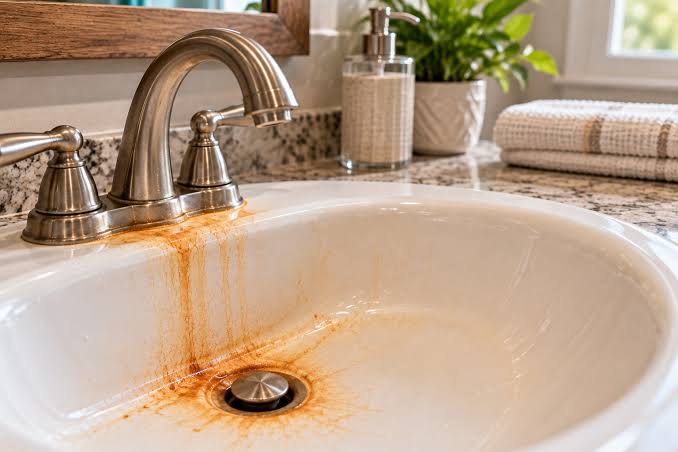
Reddish-brown marks around sinks, toilets, laundry, and bathtub surfaces can be particularly frustrating. They may look like rust, and sometimes iron in the water is responsible. However, corrosion in household pipes or fixtures can also contribute, so the appearance of a stain alone doesn’t establish its source.
Iron & rust staining can occur when dissolved iron oxidizes and forms visible deposits. Depending on the water chemistry, the problem may appear as orange streaks, brown marks, or discoloration that becomes more noticeable after water stands for a while. Manganese can also cause staining, often with darker tones.
Iron is naturally present in some groundwater sources. In other cases, older or corroded plumbing may be contributing particles to the water. The distinction matters because treating the water supply won’t necessarily fix a problem caused by a deteriorating pipe or fixture.
A suitable water test can measure iron and, where relevant, manganese and other characteristics. If the results confirm elevated iron, treatment may involve oxidation and filtration or another system designed for the water’s specific chemistry. Ordinary sediment filters don’t necessarily remove dissolved iron effectively, so choosing equipment without testing can lead to disappointing results.
Why Testing Is Better Than Guessing
Household clues are useful, but they’re only the beginning. A white film may suggest hardness, yet other residues can look similar. An unusual taste may come from chlorine, plumbing materials, or another substance. Staining may be associated with iron, but corrosion can create a similar appearance.
Testing helps separate these possibilities. For municipal water, the supplier’s water-quality report is a useful starting point. If the concern appears to be specific to your home, additional testing may help identify changes caused by plumbing or household equipment.
Private well owners should pay particular attention to regular testing because groundwater conditions can change over time. Depending on local risks, testing may include bacteria, nitrates, hardness, iron, and other relevant substances. Use an appropriate laboratory method for health-related concerns rather than relying solely on a quick in-home demonstration.
A good test report should explain what was measured and provide results you can compare with relevant guidelines. If something is unclear, ask the laboratory or a qualified water professional to explain the findings before purchasing a treatment system.
Matching the Treatment to the Problem
Once the cause is understood, choosing equipment becomes much easier. Water softeners address hardness minerals, activated carbon can reduce certain tastes and odors, and specialized filtration systems can target particular substances. Reverse osmosis may be suitable for drinking water when the selected model is certified to reduce the dissolved contaminants identified by testing.
No single technology does everything. A softener doesn’t automatically remove bacteria, and a taste-improving filter isn’t a substitute for disinfection when microbial contamination is present. Treatment should be selected according to the test results, water demand, and intended use.
It’s also important to consider maintenance. Cartridges need replacement, softeners require periodic regeneration, and specialized equipment may need professional servicing. Ask about installation costs, replacement parts, water use, and the manufacturer’s recommended schedule before committing.
Small Habits That Help Protect Your Water Quality
Keep an eye on changes in taste, odor, color, and pressure. Clean fixtures regularly, but don’t assume that repeated scrubbing is the only answer when stains quickly return. Check accessible plumbing for visible leaks or corrosion, and arrange an inspection if a problem appears to be localized to a particular fixture or pipe.
Record your water-test results and the dates of any filter changes or service visits. This simple habit can help you notice patterns and make future troubleshooting easier. If the water changes suddenly or you suspect contamination, seek appropriate advice and testing rather than relying on a new filter alone.
Making Water Concerns Easier to Manage
Unusual tastes, persistent stains, and mineral deposits can make ordinary household tasks more frustrating than they need to be. Fortunately, identifying the cause often makes the next step clearer. Pay attention to the signs, use suitable testing, and choose treatment based on evidence instead of broad product promises.
The goal isn’t to install the most elaborate system available. It’s to understand what is happening in your home and make practical changes that address the problem. With informed choices and regular maintenance, you can spend less time fighting stains and worrying about strange odors—and more time simply using your water with confidence.