


There’s a big difference between working from home and working well from home.
A laptop on the dining table might get the job done for a while. So will a makeshift desk squeezed into a spare corner. But over time, you start to feel it — the stiff back, the scattered papers, the subtle frustration that comes from never quite settling into your space. It’s hard to focus when your environment feels temporary.
The truth is, where you work shapes how you work. A thoughtful setup can boost concentration, reduce stress, and even make the day feel a little lighter. And no, it doesn’t require a massive budget or a Pinterest-perfect office. It just requires intention.
Start With How You Work, Not Just What Looks Good
Before diving into aesthetics, pause and think about your daily routine. Do you take a lot of calls? Spread out paperwork? Rely on dual monitors? Sketch ideas by hand?
Good home office design begins with understanding your habits. If you’re constantly reaching for notebooks and files, you’ll need accessible storage. If you’re on video calls all day, your background matters — both visually and practically.
It’s tempting to copy a minimal desk setup you saw online. But if your work requires tools, paperwork, or creative chaos, forcing minimalism will only frustrate you. Design should support productivity, not fight it.
Comfort Is Productivity’s Best Friend
We often underestimate the power of comfort in a workspace. But an uncomfortable chair or awkward desk height can slowly drain your energy. You might not notice it at first — just a slight shift, a small adjustment — but over weeks, it adds up.
Investing in an ergonomic chair is rarely glamorous, but it’s transformative. A desk at the right height. A monitor positioned at eye level. A footrest if needed. These aren’t indulgences; they’re foundations for a functional workspace.
Lighting plays a big role too. Natural light is ideal, but not always possible. In that case, a good desk lamp with adjustable brightness can prevent eye strain and create focus. Overhead lighting alone often feels harsh and uninspiring.
When your body feels supported, your mind follows.
Separate Work From Life — Even If It’s Just a Little
One of the biggest challenges of working from home is boundary blur. When your workspace is also your living room, it’s harder to switch off at the end of the day.
If possible, create a distinct zone for work. It doesn’t have to be a separate room. Even a defined corner can signal “this is where I work.”
A rug under your desk. A different paint color on one wall. A small shelf that holds only work-related items. These visual cues matter more than you’d think.
And when the workday ends? Close the laptop. Tuck away papers. Turn off the desk lamp. Rituals help reinforce that mental boundary.
Personalize Without Overcrowding
Your home office shouldn’t feel sterile. But it also shouldn’t feel chaotic.
Add a few meaningful touches — a framed photo, a plant, a piece of art that inspires you. These elements make the space feel yours. They soften the edges of a work-focused environment.
At the same time, be mindful of clutter. Too many decorative objects can distract rather than motivate. Keep surfaces mostly clear. Let your chosen pieces breathe.
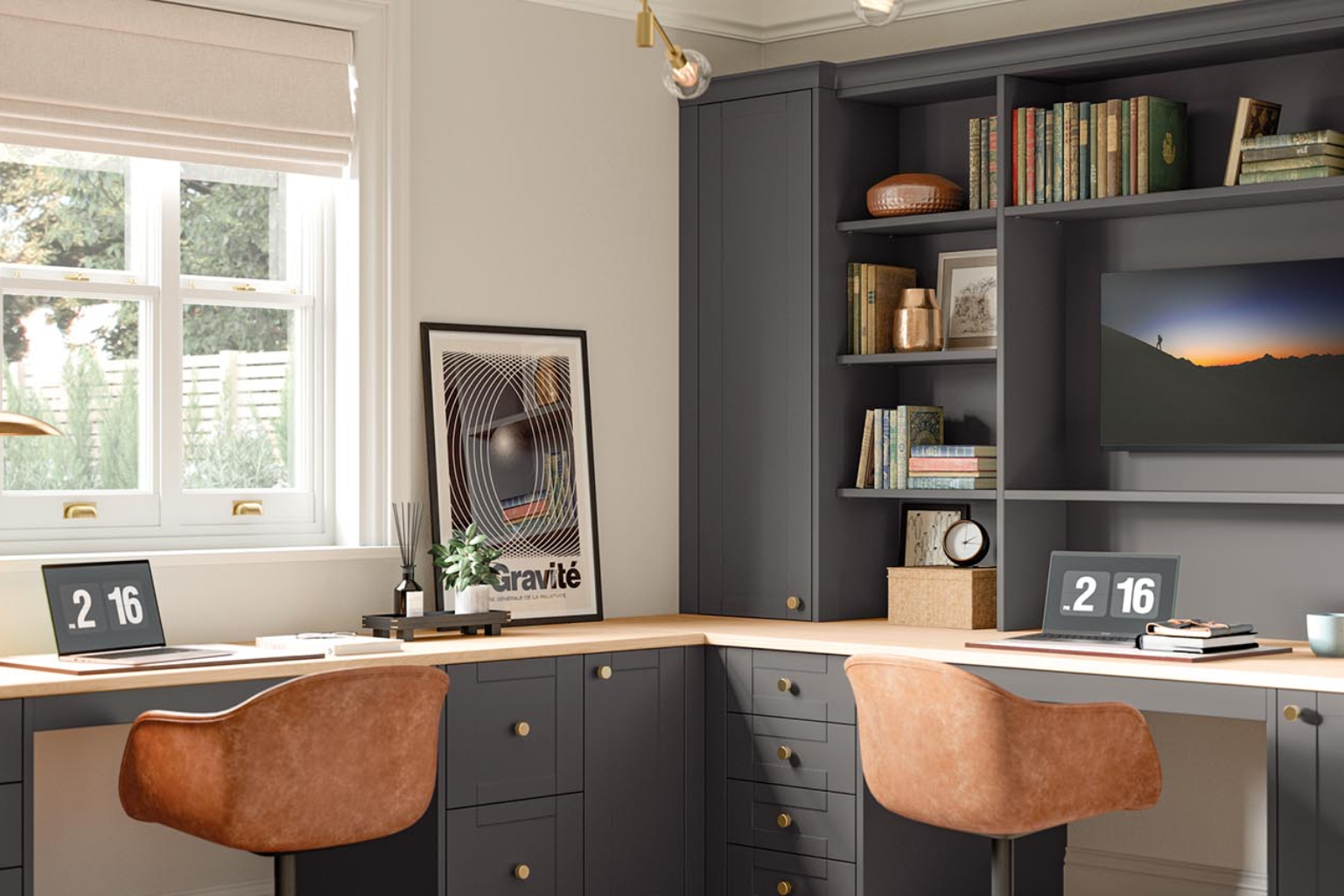
This is where tailored interiors quietly shine. A workspace should reflect your personality and your workflow. Maybe you prefer warm wood tones and soft textures. Maybe you’re drawn to sleek, minimal lines. The key is alignment — between your style and your needs.
Storage That Works Hard (So You Don’t Have To)
Papers multiply. Chargers tangle. Supplies pile up. Without a storage plan, even the most beautiful office can feel overwhelming.
Think vertically if space is tight. Wall-mounted shelves free up desk space. Closed cabinets hide visual clutter. Drawer organizers keep small items from spreading.
Labeling might sound overly organized, but it can save time in the long run. Knowing exactly where your notebook or charger lives reduces daily friction.
A workspace that’s easy to maintain is easier to enjoy.
The Subtle Role of Color and Texture
Color affects mood more than we realize. Soft neutrals create calm. Muted greens and blues can promote focus. Bold colors might energize, but too much can feel overstimulating.
Choose a palette that supports the type of work you do. If you need deep concentration, lean toward soothing tones. If creativity is your focus, a subtle pop of color might spark ideas.
Texture adds warmth. A woven chair cushion. A linen curtain. Even a wooden desk instead of metal can change the feel of the room.
These layers prevent the office from feeling cold or corporate.
Keep It Flexible
Work evolves. Projects shift. What you need today might change in six months.
Design your office with adaptability in mind. Modular shelving. Adjustable chairs. A desk with expandable space. Flexibility keeps the room relevant.
You don’t need to get everything perfect from day one. Let the space evolve with you.
A Space That Supports Your Ambitions
At the end of the day, your home office should feel like an ally. Not a compromise.
When you sit down, you should feel focused — not distracted. Comfortable — not cramped. Inspired — not overwhelmed.
Design isn’t about impressing anyone else. It’s about creating an environment that helps you do your best work.